

On September 22, a delegation of 30 journalists from 29 countries visited the First Affiliated Hospital, Zhejiang University School of Medicine (FAHZU), gaining a firsthand look at how artificial intelligence (AI) is being integrated into healthcare in China.
The visit was part of a media tour organized by Department of Press, Communication and Public Diplomacy of the Ministry of Foreign Affairs ahead of the 5th Global Digital Trade Expo. Accompanied by representatives from the Ministry of Foreign Affairs and Department of Foreign Affairs of Zhejiang Provincial People’s Government, the delegation visited FAHZU’s headquarters campus, where they explored applications of AI across diagnosis, outpatient services, critical care, pathology, and hospital operations.

Rather than focusing solely on individual technologies, the visit offered an overview of how digital tools are being incorporated into different stages of the patient journey. In radiology, journalists learned about AI-assisted diagnostic models such as PANDA Pro and RADAR. In outpatient services, they experienced smart self-service facilities and learned how AI tools, including a pre-consultation agent and OCR technology, can help streamline clinical workflows.
The delegation also visited the intensive care unit, where an AI-assisted critical care system integrates real-time clinical data to support patient monitoring and clinical decision-making. Other stops highlighted automated hospital logistics and OmniPT, a multimodal AI pathology model jointly developed by FAHZU and Zhejiang University.
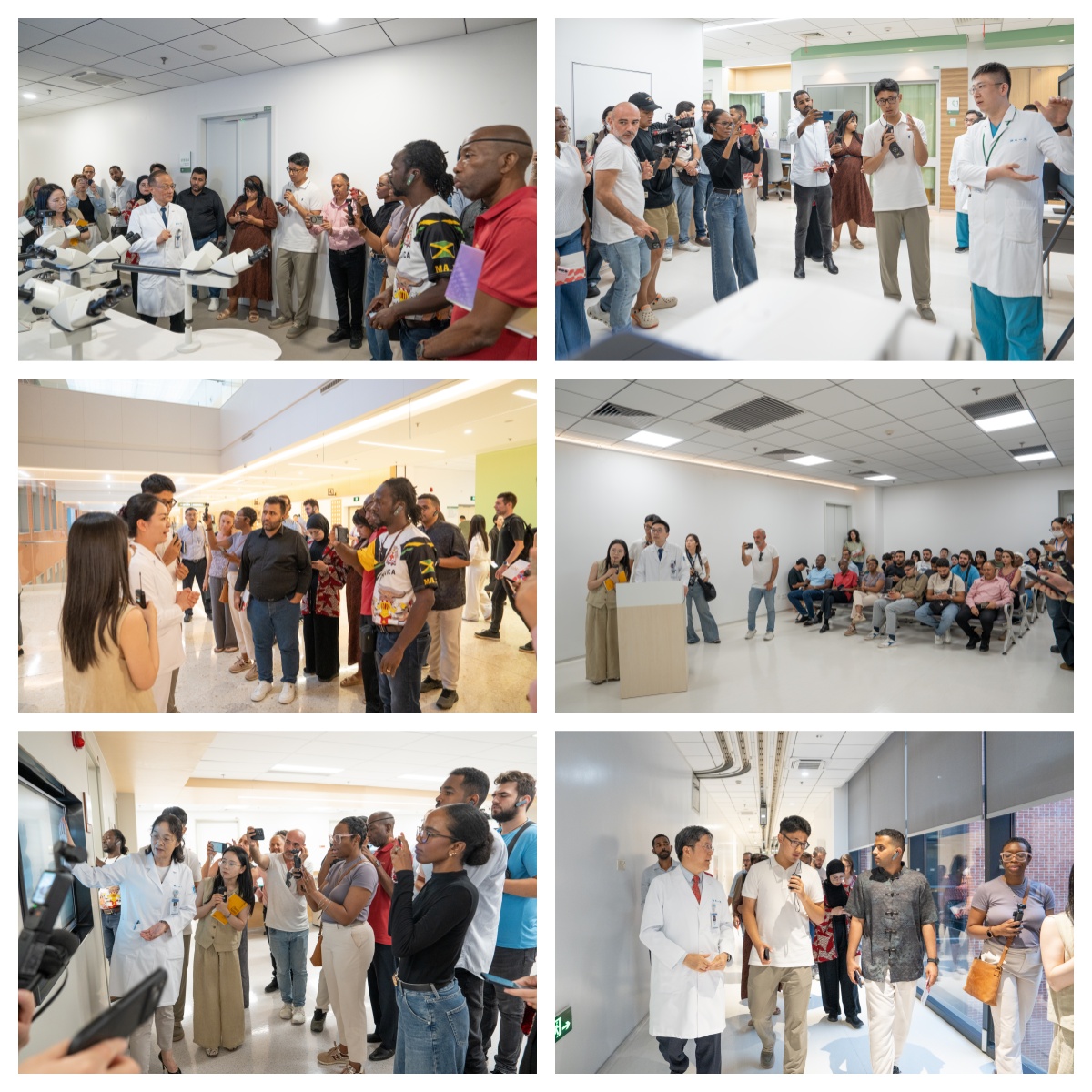
For the visiting journalists, the experience went beyond observing technology. Saudi journalist and radio host Salem Alzubaidi, who visited the hospital in traditional Chinese attire, said he was impressed by the extent to which AI is already being applied in healthcare and planned to share what he had seen with audiences in his country. Iraqi journalist Didar Latif M. Salih was particularly interested in the balance between technological innovation and patient-centered care.
The visit provided international media with a closer view of FAHZU’s ongoing exploration of smart healthcare, while creating a platform for dialogue on how emerging technologies may shape the hospitals and healthcare systems of the future.
